
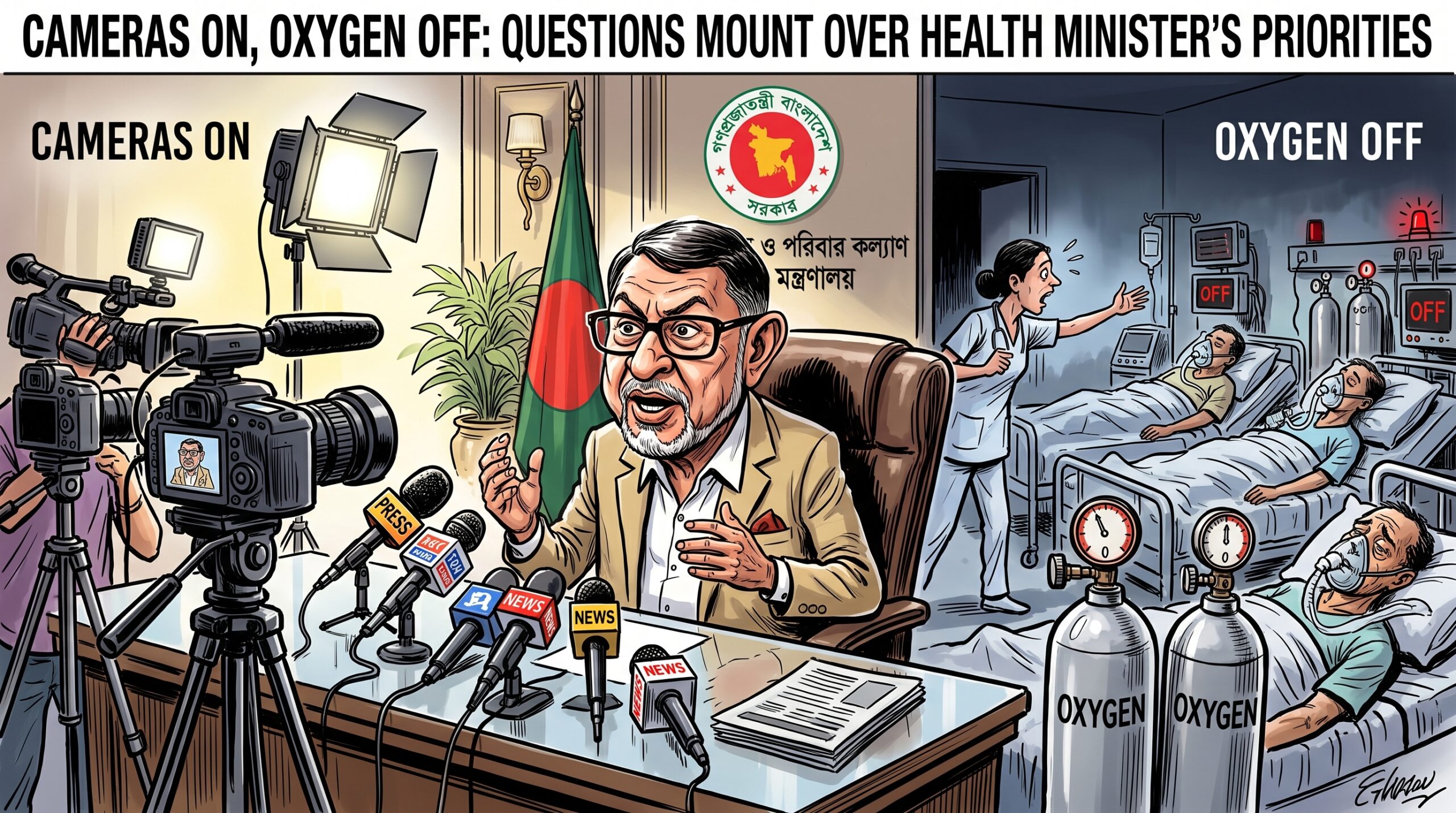
Cameras On, Oxygen Off: Questions Mount Over Health Minister’s Priorities
Beyond high-profile visits, the real test lies in lasting fixes for the health system’s structural failures
Sixty-two percent of oxygen plants in the country’s public hospitals are out of service, a recent report reveals, painting a deeply worrying picture of the health system. Meanwhile, the health minister is seen hurrying from one district to another on hospital inspections. His flurry of activity has prompted a fundamental question: where do his priorities really lie?
When the Lifeline Itself Fails
Oxygen is no optional extra; it is a basic condition for keeping a critically ill patient alive. That a large share of public hospitals cannot rely on it has now come to light, but it remains unclear how seriously the minister’s public remarks treat the matter.
Surprise Visits, Press Promises
The minister drops in unannounced at hospitals and health centres, checking that officials are present, that patients’ food is of decent quality and that the toilets are kept clean. Cameras accompany him, and after each visit comes a string of pledges to the media: problems will be solved, standards raised, action taken.
As administrative oversight, such checks certainly have their place. But when hospital infrastructure, shortages of doctors, nurses and support staff, erratic medicine supplies, fragile emergency care and the oxygen system are matters of life and death, the question of what the minister is doing beyond these visible measures cannot be brushed aside.
From Inspection to Solution: The Gap
Spotting a problem on a visit is one thing; resolving it for good is quite another. A promise of “action” alone does not reform a system. That takes steady supervision, accountability, sound spending of public funds, and a durable framework for upkeep. Compared with the visibility of the minister’s tours, ordinary people still see little measurable progress on the deeper, structural failures.
Oxygen Crisis, Offshore Gas
Occasionally, the minister’s statements also turn to subjects outside health, such as drawing gas from the Bay of Bengal. With oxygen plants in the nation’s hospitals idle, it is hardly surprising that eyebrows rise when the ministry’s highest policymaker lets talk of undersea gas overshadow that crisis.
What People Hope For
What people want from a health minister is modest but clear. Knowing who turned up and who did is not enough; they want to understand why there are too few doctors, why machines are left unusable, why oxygen plants cannot be kept running, and why patients are driven to private hospitals for basic care, and they want these problems fixed.
Real popularity in the health sector will come not from sudden visits but from a public system where patients are treated on time, get the medicines they need, never have to hunt for oxygen and need not wait for a minister to drop by before receiving good care.
The Harder Road
Touring wards before the cameras is simple. The hard part is restarting dead oxygen plants, ending years of accumulated mismanagement and mending the system’s structural weaknesses. That is where the minister will truly be judged. The question remains: will he stay within the comfort of visible activity, or demonstrate decisive leadership by delivering lasting solutions to life-and-death problems like the 62 percent of oxygen plants now lying idle?