
Fact-Check Challenges Health Minister’s Claim on Measles Vaccination
DismissLab says nationwide campaigns and routine immunisation continued; disputed remarks during an outbreak raise concerns over public trust and official accountability
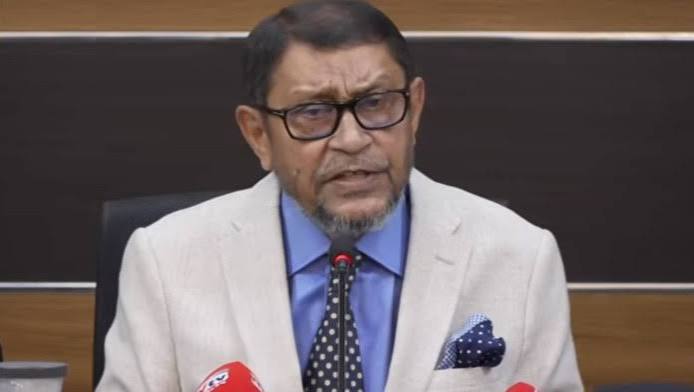
As measles cases rose across Bangladesh, a statement by Health Minister Sardar Sakhawat Hossain Bakul drew new scrutiny. At a Dhaka press briefing on 29 March 2026, he said the country had not administered a measles vaccine for eight years and that the previous vaccination campaign had taken place eight years earlier. The claim circulated as parents were already worried about the outbreak. An investigation by independent fact-checkers later presented a different account.
DismissLab examined the minister’s statement and reported that it was inaccurate. The claim has drawn criticism because it concerned the country’s immunisation record during a public-health emergency. Critics say the issue goes beyond confusion: an incorrect account of efforts to prevent a deadly disease can itself cause serious concern.
A Controversial Remark During a Worsening Outbreak
The first measles case was identified in the Rohingya camps of Cox’s Bazar in January that year, after which infections spread to Dhaka slums and areas of Mymensingh, Rajshahi and Chattogram. By March, the outbreak had intensified, hospitals were under growing pressure, and child deaths were being reported.
At the Bangladesh-China Friendship Conference Centre on 29 March, the minister told journalists that measles cases had risen sharply and said the last vaccination campaign had been held eight years earlier, with no government administering the vaccine since. He also said Tk 604 crore had been allocated to buy new vaccines and that the procurement committee had approved the process.
The remarks received extensive media coverage amid the outbreak. Independent fact-checking organisations began checking the claim soon after it was made.
What the Fact-Check Found
DismissLab’s investigation found that a nationwide measles-rubella vaccination campaign had taken place from December 2020 to January 2021, immunising about 35 million children. The report said UNICEF and World Health Organization data also confirmed the campaign.
Vaccination had also continued through the routine Expanded Programme on Immunization (EPI), according to the fact-check. Experts cited in the report suggested the minister may have meant large-scale campaigns specifically. But his statement, as presented, gave the impression that no measles vaccine had been administered at all, which the fact-check described as misleading.
The fact-checkers also examined a partial screenshot of the Directorate General of Health Services website shared on social media. It showed 57 percent coverage for 2025. A Deputy Director of EPI said the data was incomplete: first-dose coverage that year was 92 percent and second-dose coverage was 90 percent. The report said the WHO’s Bangladesh office confirmed those figures.
Criticism of the Ministry
Bakul has faced criticism for giving what the fact-check described as incorrect or misleading information about the country’s immunisation history. Public-health experts cited in the report warn that denying a past vaccination campaign while discussing the origins of an outbreak could undermine public trust.
Critics argue the minister should have addressed specific shortcomings, such as delays in vaccine procurement, stock-management gaps or weaknesses in routine programmes. Instead, they say, he made a claim that verification could disprove and that appeared to shift blame to previous governments. They describe this as political blame-shifting rather than an effort to confront the underlying problems.
The remarks also drew substantial media attention. The source report says several national and international outlets cited them as an example of misinformation and expressed concern that inaccurate statements by senior officials could compound a public-health crisis.
A Similar Claim by the Prime Minister
Less than three weeks later, on 18 April, Prime Minister Tarique Rahman made a similar claim at a conference of upazila health and family planning officers. He alleged that failures by the previous two governments had left children across the country without measles vaccination, calling it an “unpardonable crime.”
Fact-checking organisations also found that claim to be false, according to the report. Large-scale measles vaccination campaigns had been carried out under both preceding governments. During the December 2020–January 2021 campaign, Cox’s Bazar was designated a “red zone” and about 800,000 children there were vaccinated. The report says campaign records were also found in several upazila parishads, including in Dinajpur and Jamalpur, as well as in the work of the NGO Gonoshasthaya Kendra.
Observers cited in the report say two similar false claims by the country’s two most senior officials within a short period should not be dismissed as isolated slips. They view them as evidence of a broader failure in fact-checking and accountability for official statements.
Public Confusion and Possible Consequences
The minister’s remarks have unsettled some parents who had already vaccinated their children, leaving them unsure whether their children received the measles vaccine or another vaccine. This uncertainty has arisen as measles cases and child deaths are increasing, according to the report.
Experts warn that misinformation from senior government figures can create confusion and weaken confidence in vaccines more broadly. At a time when public awareness and willingness to vaccinate are important to controlling a deadly disease, they say, inaccurate claims could have the opposite effect.
Accountability Remains Unresolved
Analysts say accuracy in public statements is a basic responsibility for anyone leading a sensitive portfolio such as health. The source report says the ministry had not publicly acknowledged an error or issued a correction after fact-checkers identified the discrepancy, a silence critics consider troubling.
Analysts argue that genuine weaknesses in the outbreak response—such as procurement delays or stock-management problems—should be acknowledged openly, alongside a clear plan to address them. Instead, they say, an unsubstantiated claim and blame directed at previous governments have further highlighted a lack of transparency in public-health governance.