From Lisbon to Rajshahi: How Dr Ziauddin Hyder Is Reshaping Bangladesh’s Health Sector
A global pledge on midwives, new children’s hospitals, and a major grassroots workforce drive
At an international midwifery congress in Lisbon in June, Bangladesh made a bold promise. By 2030, it would train and deploy 25,000 midwives. Four months later, the man who made that pledge is visiting hospital wards at home, working to turn plans into services.
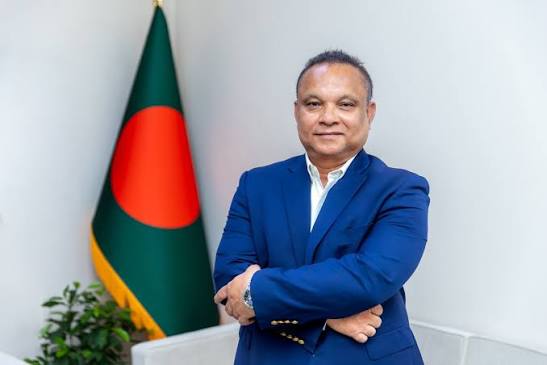
Dr S M Ziauddin Hyder, Special Assistant to Prime Minister Tarique Rahman on health affairs, announced the commitment on 14 June. He was speaking at the 34th Triennial Congress of the International Confederation of Midwives. UNFPA Executive Director Diene Keita welcomed it and described Bangladesh as a pathfinder in building a professional midwifery workforce.
The plan at a glance
- Health workforce: 100,000 health workers and 25,000 midwives to be recruited within three to four years
- Midwives in every community: two midwives for each rural union and each urban ward, focused on pregnant women, new mothers and newborns
- Children’s hospitals: five 200-bed hospitals, idle for years for lack of staff and equipment, set to open this year, possibly together in November or December
- Rajshahi Medical College Hospital: 100 ICU beds planned alongside its 1,200 general beds
- Snakebite care: prompt antivenom supply promised for the Padma basin, where snakebites are common
- Quality, not just numbers: strong focus on training and skills development
Why it matters
Healthcare in Bangladesh has long been concentrated in Dhaka and other large cities. Dr Hyder sees the shortage of trained staff as one of the biggest obstacles to reaching people at the grassroots.
Rajshahi Medical College Hospital, which he visited on 31 October, shows the problem clearly. Its beds more than doubled in 2013, from 550 to 1,200, but staff, infrastructure and equipment did not keep up.
The man behind the plan
Born in Naikathi village in Jhalakathi, Dr Hyder earned his MBBS at Sher-e-Bangla Medical College in Barishal. He then completed a master’s in food and nutrition planning at the University of the Philippines and a PhD in nutrition and epidemiology at Umeå University in Sweden.
Over more than 30 years, he worked in 35 countries with BRAC, FAO, the University of Toronto and the Global Alliance for Improved Nutrition (GAIN). He retired from the World Bank in 2024 as a Senior Health and Nutrition Specialist. He took up his current post, with the rank of state minister, on 22 April this year.
What comes next
If these plans are carried out on schedule, they could noticeably improve primary healthcare, maternal and child health, and the skilled workforce at the grassroots, bringing care closer to millions of people.