Meetings Galore, Outcomes Nowhere: Is the Health Ministry Becoming a Diplomatic Stage?
No agreement, funding or training programme mentioned in published accounts; coordination with the Foreign Ministry also unclear
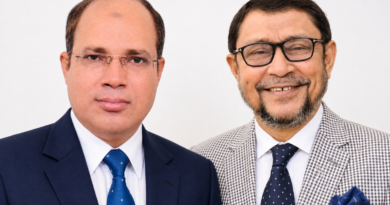
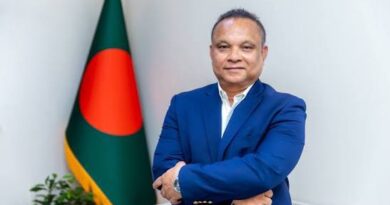
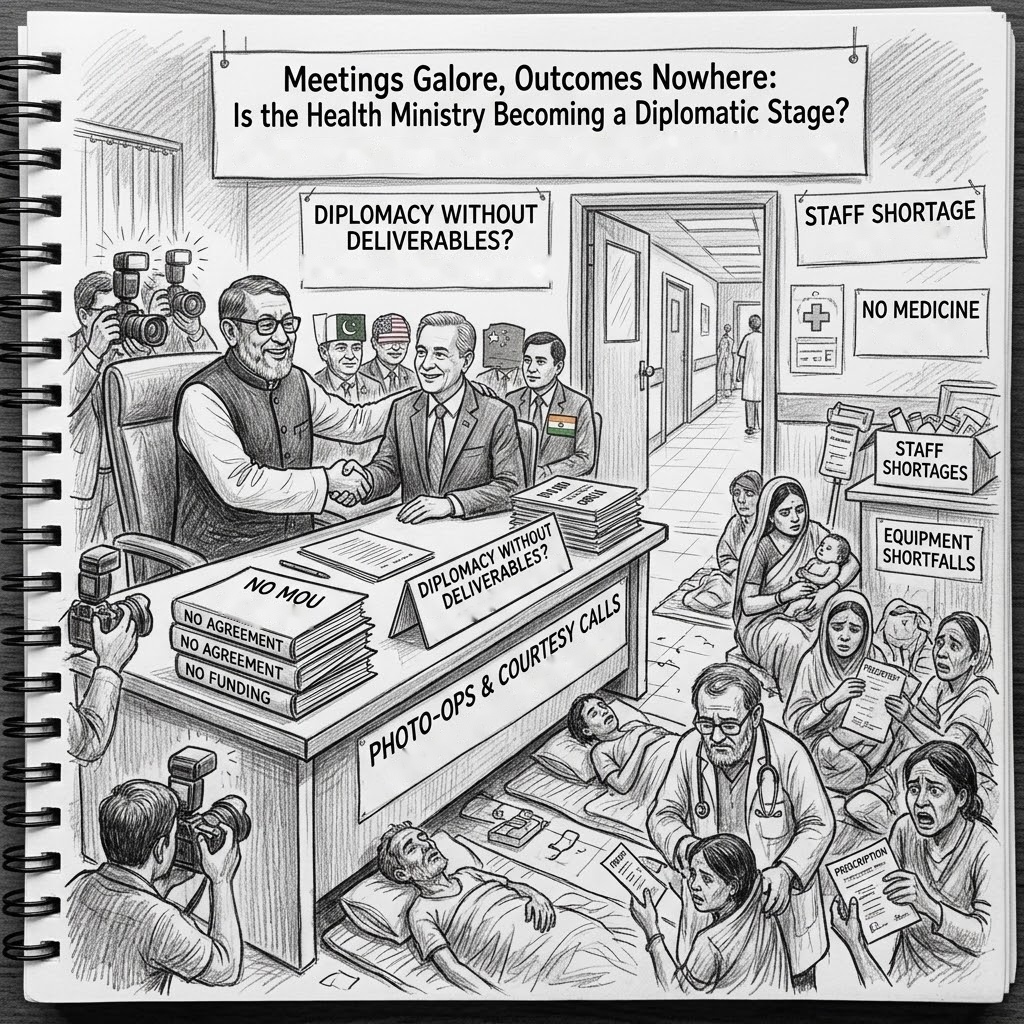
Since assuming office, Health Minister Sardar Mohammad Sakhawat Hossain Bakul has met foreign diplomats in quick succession. News of his talks with representatives of Pakistan, the United States, the Philippines, China, Thailand, Denmark and India has been published. However, what the health sector has gained from them is still unclear.
Accounts for the meetings are limited to courtesy-call descriptions and photographs. None mentions an agreement, a MoU, financing, technology transfer or a training initiative, and the subject is reportedly being talked about inside the administration too.
Normal Practice, an Unusual Silence
Cooperation abroad on vaccines, medicines, medical technology, research and the training of health workers is now an accepted strand of diplomacy. A health minister meeting foreign envoys is therefore hardly out of the ordinary; what draws attention is the absence of any stated result, purpose or accountability.
Observers note that meaningful health diplomacy normally leaves measurable traces, whether an MoU, a project, a training scheme or a policy decision. In their absence, such meetings tend to remain courtesy visits.
Who Is Coordinating?
When ministers engage foreign governments, coordination with the Foreign Ministry and the government’s official diplomatic channels is normally expected. Yet the agenda of each meeting, any consultation with the Foreign Ministry before or after, and the identity of the health ministry official following up have all gone unreported.
Nor is there any reliable account of whether the meetings reflect the minister’s own initiative, a broader government plan, or guidance from the party. That vacuum has produced speculation in political circles, though none of it has been supported by evidence.
Problems at Home
At home, the health system faces a shortage of staff, a lack of hospital beds, hurdles in medicine supply, gaps in medical equipment and rising treatment costs borne by patients. Those close to the sector say that, given this, asking how the minister is spending his time and what he is prioritizing is only natural.
Still, foreign engagement and domestic governance should not be set against each other. External partners can bring money, technology and expert help to the sector. The real test is whether the benefits flow through to hospitals, doctors, nurses and patients.
Open Questions
- What exactly was decided in the talks with India, China, the United States, Denmark, Thailand, the Philippines and Pakistan?
- Has any agreement, project or cooperation programme begun as a result?
- Were the meetings arranged in coordination with the Foreign Ministry?
- Who is accountable for acting on what was discussed?
The sheer number of meetings proves neither wrongdoing nor political motive. But if their purpose, agenda and outcomes stay out of public view, the questions will persist. The Health Ministry’s comment will be included if it becomes available.