Terror on the Treatment Floor: Thugs Ransack Khulna’s Clinics While the Health Minister Looks the Other Way
Is the ministry’s real priority patient safety, or the business of transfers and postings?
An attack on a diagnostic centre is not just about broken glass, chairs, air conditioners or televisions. It is an assault on every sick person who walks through its doors in search of care. In Khulna, that assault is now happening with frightening regularity.
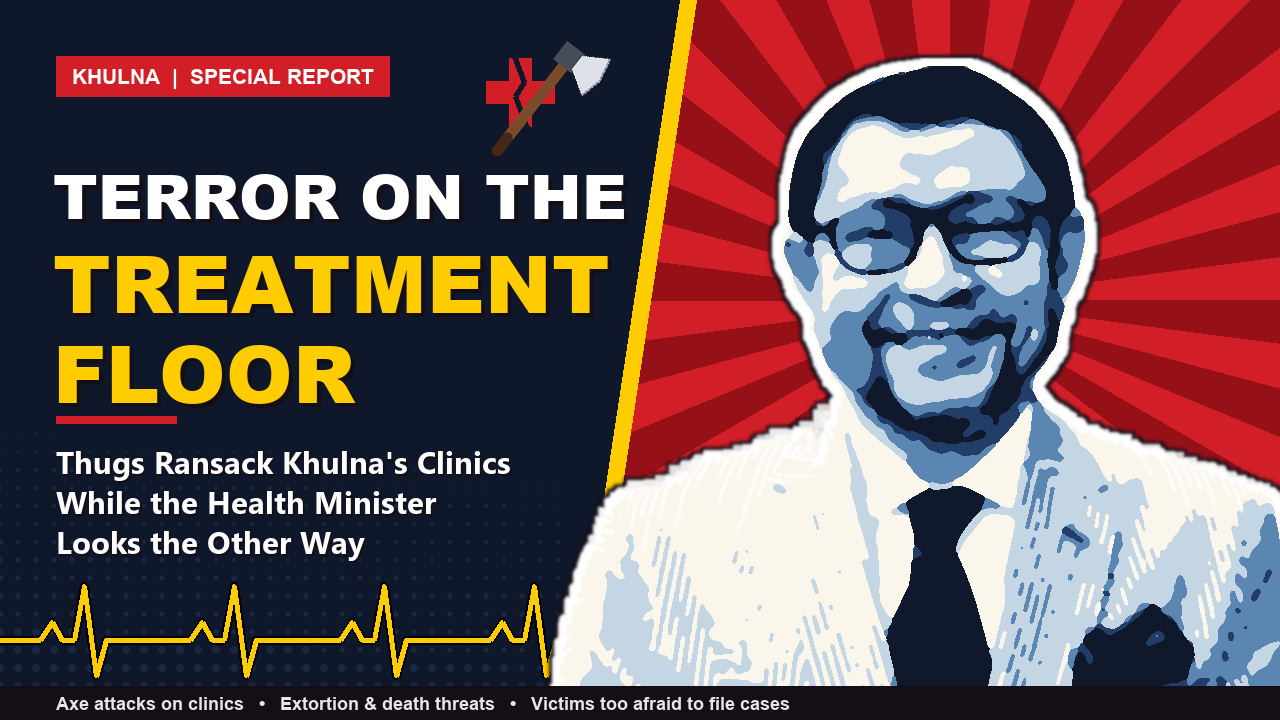
On Saturday afternoon, five young men brandishing Chinese axes burst into New Apollo Diagnostic and Consultation Centre on Khan Jahan Ali Road and tore the place apart: air conditioners, a television, glass doors, the reception counter. Patients waiting for treatment scattered in panic.
It was the latest in a string of attacks. Within a month, four health facilities in Khulna city have reportedly faced vandalism, extortion demands and death threats. Before New Apollo, City Queens Clinic, Sandhani Clinic, Rongdhonu Clinic and Abdullah Pathology all reported attacks, extortion demands or beatings of staff. At one facility, shots were fired into the air.
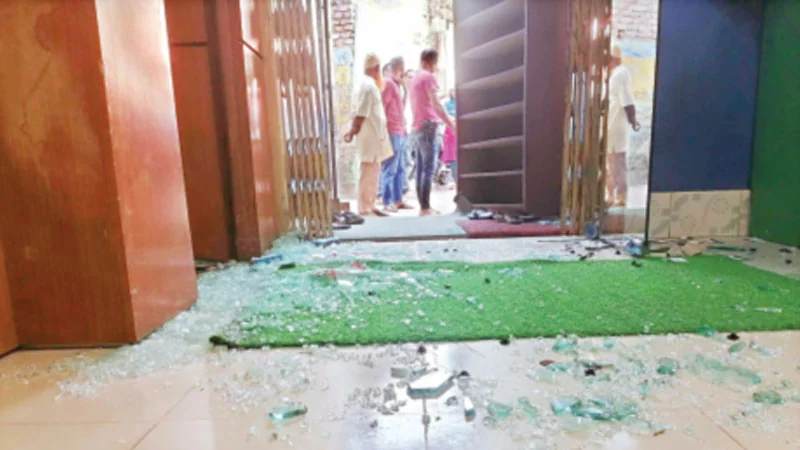
Where does their nerve come from?
The answer may lie in what has not happened. Police say most victims never filed a case. The only exception is Sandhani Clinic, where bullet casings were found; police filed a case on their own and arrested three people. Elsewhere, no arrests. Fear has silenced the victims, and that silence has emboldened the attackers.
Media reports point to notorious criminal Nur Azim and his associates, accused of demanding extortion and vandalising establishments across the city, though none of these allegations have yet been proven in court. Meanwhile, speculation persists in Khulna over whether extortion money is shared with political or influential figures, and some critics have questioned the role of officials within the Health Ministry itself. Only an independent, impartial investigation can settle these questions.
A ministry of transfers?
The Health Minister’s job is not merely to announce hospital projects or pose for inspection photos. It is to build a system in which doctors treat without fear, health workers do their jobs safely, and patients seek care without dreading an armed gang. Yet critics point out that the issue dominating discussion of the minister’s recent activity is the transfer and posting of doctors and nurses, not the safety of the facilities under attack.
Is the Health Ministry merely an office for transfers and postings, or is it also accountable for the safety of the nation’s healthcare system?
Accountability, not photo ops
Khulna is a loud warning bell. Will the minister treat this crisis with the seriousness it demands, or will patient safety be buried under the busy work of reshuffles? Extortionists swinging axes inside clinics, patients fleeing in terror, those in charge saying nothing: no country’s healthcare system can function like this. Healthcare is a fundamental right, not a racket, and the ministry has no room to dodge the blame.