A BNP Minister Who Says ‘Don’t Treat Me as BNP’: Health Minister’s Remark Stirs Unease
Foregrounding freedom fighter identity, distancing from party identity? New questions over the minister’s statement
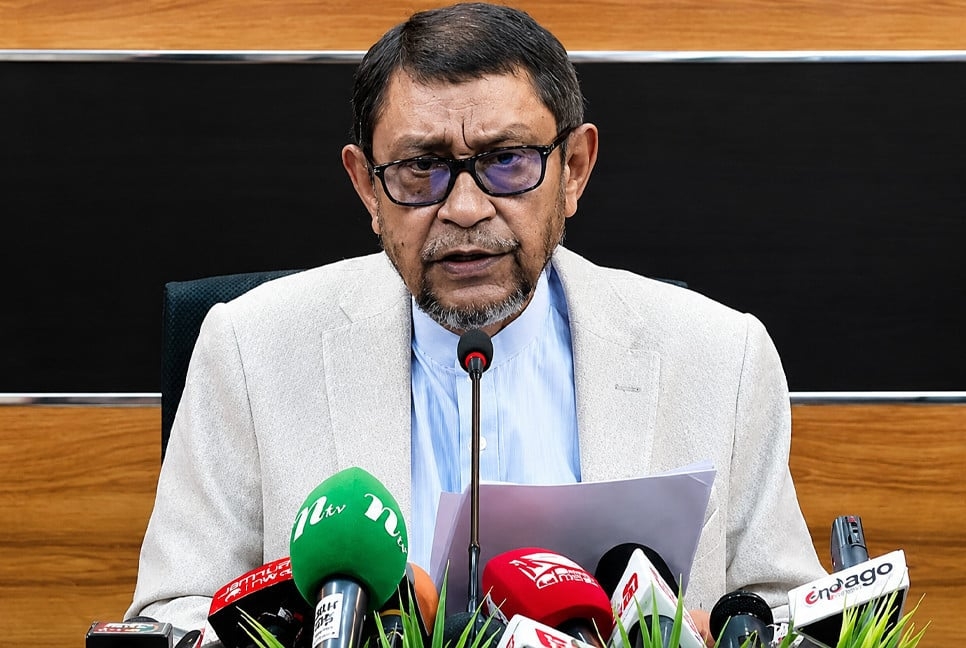
A remark by Health Minister Sardar Md. Sakhawat Hossain is drawing considerable attention in political circles. At a Bangladesh Midwifery Society event on 6 July, he said, “Don’t treat me as BNP. See me as a human being. I am a freedom fighter.”
How reasonable it is to brush this aside as a mere emotional outburst is the question. The speaker is no ordinary citizen; he is a minister in a political government, and that government is BNP’s.
The question is therefore straightforward: if a minister in a BNP government does not wish to be known as BNP, in what capacity does he sit in the cabinet?
Why So Reluctant About the BNP Identity?
The minister certainly has the right to present himself as a freedom fighter. The war of 1971 is an important chapter in his personal life. The objection lies in the latter part of his statement: “Don’t treat me as BNP.”
Party identity is nothing to be ashamed of in politics. It is through party identity that a minister is bound to remain politically answerable to the public.
Nor is the BNP short of freedom fighters. The party holds up its founder, Ziaur Rahman, as a notable figure in the history of the Liberation War, and many of its leaders and activists took part in the war. Yet a minister has presented his freedom fighter identity in a way that suggests the BNP identity carries less honor for him. Is that fair to the party?
His Liberation War, or Everyone’s?
In his speech, the minister recounted his wartime memories in detail — his mother’s tears, nine months of separation, the decision to join the fight for the country. These memories are undeniably moving.
However, Bangladesh’s Liberation War is not a tale of any single person’s achievement. Millions gave up their lives, families, security, and futures. Countless freedom fighters became part of this history without seeking any publicity.
So when a minister sets his freedom fighter identity against his party identity, the question arises: is this an expression of self-respect, or a strategy to show distance from his political identity?
Respect for the Party’s Leadership, Distance for Himself?
What is more surprising is that in the same speech the minister praised the political roles of Ziaur Rahman and Khaleda Zia. That is, he accepts the party’s history and the legacy of its leadership, yet when the subject turns to himself, he wants not to be counted as BNP.
This double position is what gives rise to the biggest question.
If the identity of the party’s founder and leadership is a matter of pride, why does he need to avoid that identity in his own case?
The minister could have said that, though a minister of the BNP, he serves everyone equally in discharging state duties, regardless of party or opinion. That would have been a responsible statement.
But “Don’t see me as BNP” suggests instead that the minister wants to remove himself from his own political identity.
The Questions Demand an Answer
Being a freedom fighter is a source of pride. But there is no need to use that pride to belittle one’s party identity, especially when it is on the basis of that identity that a person is entrusted with an important ministry of the state.
Several questions therefore remain:
Why object to being known as BNP while serving as a BNP minister?
Why was there a need to set his freedom fighter identity apart from that of the party’s other freedom fighters?
And the biggest question: by sidestepping the identity of the party whose government he serves in, on a public stage, whom is he actually sending a message to?